Callum
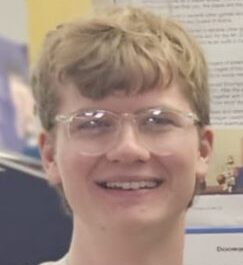
Name: Callum
Sponsor: CML Micro
University: Cardiff University
Degree Course: BEng Electrical and Electronic Engineering
Why did you choose CML Micro?
I first found out about CML Micro while looking at the companies listed on the UKESF website. At the time, I had just finished my second year and particularly enjoyed the introductory RF engineering modules I had taken. The CSD team at CML Micro seemed like a great opportunity to further my knowledge in this area and learn how to apply it practically. I was also excited that the placement would involve tasks directly linked to active product developments, which I hoped would allow me to work closely with the engineering team and learn from their expertise.
The interview process had two rounds – an initial interview over Teams and an in-person technical interview at the CSD office. Before my first interview, I mainly researched the company by looking at their website, specifically their case studies, to get a better idea of the sort of designs they work on. I was very nervous before (and during!) the interview, but my interviewers were very understanding of this and were happy to rephrase questions and prompt me in the right direction.
What was the first week of your placement like?
Before my first day, I was very stressed! Despite meeting the team during the interview process, I had never worked in industry before and was worried I’d become overwhelmed by the differences to university study. However, after the first few minutes, I was completely fine. After some quick introductions with the CSD team, I sat down with the department head and my two supervisors for an introductory meeting, where they went over the projects they were interested in having me work on. I spent the rest of the week getting into the flow of these projects, as well as typical induction activities covering health and safety, HR and IT.
After the first month of your placement, what had you experienced?
After the first month of my placement, I had fully settled into the dynamics of the office and the workflow of my projects. While I wasn’t perfect, I had also become much more confident with the software I was using, as well as the format of my weekly design reviews. I primarily worked alongside my two supervisors, but increasingly sought help from with other members of the team as the placement progressed.
I was also able to attend several company get-togethers, including a monthly work lunch at some local pubs, as well as a barbecue at the headquarters in Langford. Here, I was able to meet other UKESF interns who were based in different departments/offices.
By the end of your placement, what were the key things you learned?
By the end of my placement, I had helped kickstart the integration of Python automation within the department’s Keysight ADS workflow, as well as investigating its scope to create EM surrogate models using neural networks. I also developed a preliminary design for a 5 – 6 GHz IPD matched power amplifier.
On the technical side, I massively increased my confidence with EDA software (specifically Keysight ADS) as well as Python programming. Additionally, I learned a lot about the processes involved in real engineering within a team environment, such as preparing for regular design reviews and creating documentation for my projects so that they could continue to be worked on after the end of my placement.
What advice would you give to future UKESF Scholars joining CML Micro?
Ask all the questions – especially the silly ones! It is the best way to learn new things and become more familiar with your sponsor company. Asking good questions is also a valuable skill to have as an engineer. Getting clarification on project requirements from a client, or seeking advice/feedback from more experienced colleagues, are things you will need to do throughout your engineering career, not just during your placement.
What are you interests outside of work?
Outside of work, I like to make electronic music, restore old technology and watch horror films (Saw II is my favourite!)
View other scholars profiles
Tara
Arm
"I've been learning more about chip design, the flow of SoC development and how different blocks fit together. I've also started building my verification skills, from writing tests and analysing waveforms to understanding issues in more detail and working out how to solve them."
Alfie
CSA Catapult
"Learning industry-standard RF & Microwave EDA tools, developing both technical skills and soft skills, access to cutting-edge laboratory equipment and being able to learn from the wealth of extremely talented engineers at CSA Catapult has been a great benefit to me both professionally and personally."

Grace
Viper Innovations
"Working closely with my line manager, I had helped to create an initial framework for an improvement to one of Viper’s products, using Azure IoT Edge, Python, Raspberry Pi HATs (Hardware Attached on Top) and communication methods"