Specialised Imaging
We are developing new sensors for Specialised Imaging’s next generation of cameras utilising the latest foundry technologies Specialised Imaging
Our Scholarships
Placement Location
Cambridge
Type of Placements Offered
• Summer placements only
Restrictions/Notes
Students must be in the penultimate year of their degree
Who we are and what we do
Specialised Imaging Ltd is a dynamic company which is focused on niche imaging markets and applications, with particular emphasis on high-speed image capture and analysis. We are market leaders in the design and manufacture of Ultra fast framing cameras and Ultra high speed video cameras. SI Sensors is a division of Specialised Imaging, focused on the development of new Advanced CMOS Image Sensors. We are developing new sensors for Specialised Imaging’s next generation of cameras utilising the latest foundry technologies, and also for other customers with bespoke Image sensor design requirements including for space and defence applications.
What you could be doing during your work placement
 Your placement would be with our Research and Development team in Cambridge. We are a small team
of highly focused and experienced Image Sensor, Analogue and Mixed Signal Design Engineers.
Placement work can be adjusted to match the interests of a successful applicants, but could include:
- Verilog RTL design and implementation (synthesis and place-and-route) for both on-chip and FPGA applications
- Analogue CMOS circuit design for key building block in the design of image sensor ASICs
- Characterization and measurement of image sensor performance (from photon to digital image)
Meet two of our Engineers (both former UKESF Scholars!)
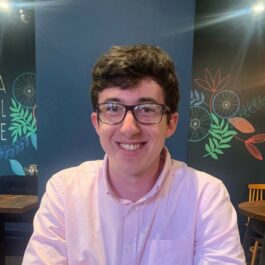
Name: Ryan
Job Title: Graduate Engineer
What appeals to you about Electronics?
I like how electronics sits between software and hardware, relying on skills from both disciplines to excel at it. My university course supported this well since it covers both computer science and electronics, and it has only enhanced my appreciation towards electronics.
Why did you apply for a scholarship with Specialised Imaging?
I had never worked nor learned about the image sensor field before, so I saw it as an opportunity to challenge myself and diversify my skills and knowledge.
The interview process with Specialised Imaging was also positive for me. The part that stood out was being asked about Verilog and hardware design which I have covered during my course. Since this was a skill that I would have to use in my third year, I thought it would be valuable to get additional experience.
What type of work were you involved with during your placement?
I worked on the digital side of sensor design and much of my work surrounded creating test patterns to validate timing and sensor functionality. I also explored the next stages of the design process which included implementing digital blocks into layout.
Another key element of my placement was characterising a camera sensor on a Raspberry Pi. I produced a report for the camera sensor which would typically be distributed to customers so they can determine whether the sensor would be appropriate for their applications.
What work have you been involved with since joining Specialised Imaging as a Graduate Engineer?
I’ve worked on a range of tasks which has allowed me to gain experience across almost all aspects of the company. I continued working on my test patterns, focusing on simulation and verification. I worked with FPGAs to test out our new serial interface design. I’ve worked on layouts focusing on routing optimisation, as well as a standalone project to develop a more power efficient flip-flop for one of our future projects. Along the way I’ve also done a good amount of digital design for various bug fixes and design enhancements.
A highlight for me was that I got to experience my first tape-out, which involved running plenty of simulations across the digital and analogue domains.
What it’s like to work for Specialised Imaging?
It’s a great environment, I feel trusted to get the work done but support is always available if I need it. There are regular check-ins to ensure everything is going smoothly, and it is always clear what work is on the horizon. I also feel empowered to steer the direction of my work to what I want to develop my skills in. Being able to work with both digital and analogue tools has been ideal, as I want to stay versatile as a designer.
Aside from the work, everyone is incredibly friendly and we often go on trips to the pub!
What do you like to do outside of work?
Aside from binge watching YouTube videos I play video games and ultimate frisbee. I also enjoy exploring the local villages around Cambridge and doing parkruns.
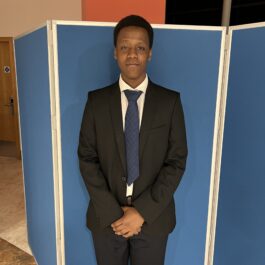
Name: Mark
Job Title: Graduate Engineer
What appeals to you about Electronics?
I enjoy the combination of applied theory, creativity, and modern technology in developing novel solutions to challenging engineering problems. With ongoing developments in AI, photonics and material science, technological advancement is rapidly accelerating, making it an exciting time to work as an electronics engineer.
Why did you apply for a scholarship with Specialised Imaging?
I was keen to work with Specialised Imaging, as they are globally recognised for their market leading ultra-high-speed imaging systems, which are used in a variety of industries, ranging from industrial and defence applications, to scientific research. Having completed a placement with a defence company specialising in the design of electro-optical devices, and a research placement studying the effects of laser welding through metallography and SEM analysis, a placement working with SI-Sensors was a familiar progression from my previous exposure to imaging systems (no pun intended). The opportunity to work on the development of world-leading image sensors is rare and I was glad to secure a scholarship with SI-Sensors.
What type of work were you involved in during your placement with Specialised Imaging?
During my summer placement, I worked as an Analogue IC Design Engineer, with a focus on the pixel architecture as part of a feasibility study for a future image sensor. My day-to-day tasks involved schematic design, spectre simulations and pixel layout using Cadence design tools. I was able to apply circuits I’d learnt about, such as source-followers and current mirrors, and put them into practise in the design of a pixel. I was also introduced to more advanced concepts such as measuring noise sources within the circuit using ADE Explorer, and implementing design techniques such as correlated-double sampling (CDS) to minimise readout noise. After the pixel layout was complete, I carried out DRC and LVS checks, to ensure that the layout was compliant with the PDK design rules, and matched the schematic design