Multiple Access Communications Limited (MAC Ltd)
"Our team of world-class wireless experts have been delivering solutions to the global communications industry for 40 years." Multiple Access Communications Limited
Our Scholarships
Placement Location
Southampton
Type of Placements Offered
• Summer placements only
Restrictions/Notes
(1) Students must be in the penultimate year of their degree; (2) Must have a minimum of 5 years permanent residency in the UK; (3) Candidates may be required to undergo security clearance
Who we are and what we do

At Multiple Access Communications Limited (MAC Ltd) we have been providing world class products and design services to the global mobile communications industry for 40 years. We have built an outstanding reputation within the industry, which is a testament to the high quality and professionalism of our engineering team.
MAC Ltd was founded in 1986 by Professor Raymond Steele, one of the Founding Fathers of modern-day mobile communications, to tackle the engineering challenges of taking mobile communications from an expensive and luxury item, which was only accessible to business executives and professional users, to the smart phones that we see today that are accessible to everyone. He achieved this by handpicking, training and mentoring exceptional electronic engineers to build a world class team that were able to take on and solve the most difficult engineering problems. The current senior leadership of MAC Ltd were part of this early team and we continue Professor Steele’s successful approach today.
Everything we do at MAC Ltd is focused on the radio interface between wireless devices. This has included developing improved modulation and radio access schemes, improving the ability of devices to cope with increasing interference, developing radio spectrum sharing approaches and providing products to test and validate radio communication systems. We have worked on every generation of mobile phone technology, from the early analogue devices to today’s 5G smart phones. We have also worked across many sectors including telecommunications, public safety, defence and security.
What you could be doing during your work placement
We are looking for scholars with an interest in and enthusiasm for wireless technology, signal processing and embedded systems. As a Scholar you will be engaged on a project focused on innovative wireless technologies. This could include FPGA design, modelling using MATLAB and Simulink, digital signal processing on software defined radios, waveform development and artificial intelligence and machine learning.
Meet one of our Scholars

Name: Jack
Sponsor: MAC Ltd
University: University of Southampton
Degree Course: MEng Electronic Engineering
What appeals to you about Electronics?
I have always viewed electronics as a hobby and was lucky enough to study it at GCSE and A Level. It was during my time at school that I learned about the components of analogue and digital electronics and their wide range of uses, many of which I realised when building projects. Since I started studying Electronic Engineering at the University of Southampton, I have taken particular interest in wireless communications, digital system design and mixed signal electronics.
Why did you want a scholarship with MAC?
The opportunity to apply for an internship with Multiple Access Communications Limited (MAC Ltd) came at a perfect time for me. I had just begun my 3rd year communications project, and independent studying helped me see future potential in modern communications standards. MAC Ltd were offering a placement that would help me to further explore this field, and I am very glad I took the offer.
What type work have you been involved with during your placement?
My target for the placement was to learn more about field programmable gate arrays (FPGAs) and hardware description languages (HDL) and to gain experience using relevant software tools. During my placement I was able to meet all 3 goals!
I was tasked with creating an Advanced Encryption Standard – Galois/Counter Mode (AES-GCM) encryption and decryption system in Very High-Speed Integrated Circuit Hardware Description Language (VHDL): first by creating a MATLAB model, and then implementing that model in a “hardware sense”, prioritising logic speed and area. I also got to create block designs for the FPGA development board using Vivado to implement the encryption core on the FPGA. Having never used VHDL and Vivado before, I was surprised how quickly I got the hang of it, and I have my MAC Ltd mentors to thank for this.
What are your interests outside of work?
My interests outside of work include long hikes in the countryside, watching TV and the occasional chess game.
And another

Name: Henry
Sponsor: MAC Ltd
University: University of Cambridge
Degree Course: MEng Electrical Engineering, Mechanical Engineering
What appeals to you about Electronics?
Electronics is always at the cutting edge of the engineering industry, which makes it an exciting sector to be a part of. Since electronics encompasses such a wide range of constantly developing engineering areas, you can be part of many different types of projects through a career, which I find rewarding and exciting.
Why did you want a scholarship with MAC?
Through my research before coming to MAC Ltd, I realised that the company was at the cutting edge of embedded systems and signal processing, whilst maintaining a friendly and supportive atmosphere. I have a particular interest in field programmable gate arrays (FPGAs) and networking, so the projects at MAC Ltd seemed like the perfect fit for me.
What type work have you been involved with during your placement?
Throughout my placement I have been working on an FPGA deployment of a standard encryption library, to increase the data transmission rate. I have gained experience in using networking protocols, C coding, Unix command line tools, Makefiles, Matlab and Very High Speed Integrated Circuit Hardware Description Language (VHDL). These different tools were all used through the research, design and deployment phases of the project to understand and modify the original source package.
With the support of my colleagues at MAC Ltd, I learnt a vast amount of skills and gained lots of experience throughout the internship, and enjoyed the work thoroughly.
What are your interests outside of work?
Outside of work, I’m a big football fan, but I won’t reveal which team I support… I’m also mad about cars, especially those from the 80s and 90s, so I’m always dreaming about my future garage in my spare time.
Meet one of our Engineers
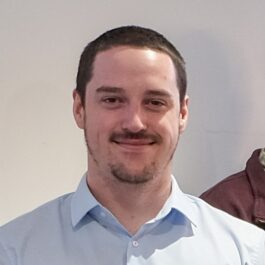
Name: Dan
Job Title: Engineer
Why Engineering?
Throughout my life and studies, I was always most engaged when solving complex problems. Alongside a fascination with computers and electronics I knew that pursuing further studies and a career in Electrical and Electronic engineering would be the perfect fit for me.
What it’s like to work for MAC Ltd
Being an Engineer at MAC Ltd for three years now, has given me opportunity to be involved with a variety of different challenging projects and integrate well into the company. One of the benefits of working at MAC Ltd is that as a consultancy the day-to-day project work will vary drastically, definitely a step away from any monotony of a typical office job! Working in small teams on a project allows you to be involved in the full development life cycle, something that I value greatly from my experience here. Being able to contribute to design, implementation and testing of a project develops a wide base of skills and is invaluable engineering experience.
The part about working at MAC Ltd that I most appreciate is the working environment of the company. All the engineers here at MAC are helpful and approachable, and I have never felt alone in tackling any problem I’ve had during my work.
A day in the life at MAC Ltd
Every day coming into work is different at MAC. The skills you will use and develop depends entirely on what the project you are currently working on entails. For me personally this has involved System and Software design, implementation work in C++ and Python, as well as FPGA development in VHDL, and even PCB manufacture and soldering work, which is quite a mix of disciplines. On top of that, many of the projects that required these skills have required them at the same time, for example developing the FPGA design for a Software Defined Radio, and then the accompanying C++ control software. Because of this day-to-day life at MAC is engaging and fulfilling, so expect to grow a wide variety of skills during your time here.
And another
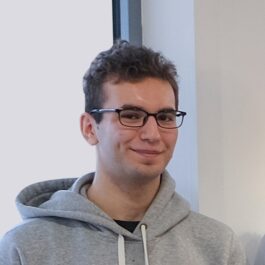
Name: Jamie
Job Title: Engineer
Why Engineering?
I’ve always enjoyed science, maths, and the puzzle of understanding how things function; a big part of that is seeing the tangible results. Luckily for me this ruled out physics or mathematics, making engineering an obvious choice. I chose electronic over mechanical engineering because it allows for easy solo development without the need for expensive or bulky equipment.
Life at MAC Ltd
After completing my MEng in Electronic and Electrical Engineering with Industrial Studies at the University of Southampton, I wanted a career where I could apply what I learnt during my degree. Since joining the team, I have contributed to multiple projects spanning diverse disciplines – from HDL design to software architecture. My primary focus has been on 4G and 5G mobile networks, learning the backbone of modern cellular technology. With the variety of projects available, I’ve been given the opportunity to focus on the aspects of the role that excite me most, making the most of my skills and interests and avoiding some areas that I’m less enthusiastic about. I believe the flexibility of the role is a unique benefit MAC provides.
A Day in the Life
The day-to-day tasks are independent, engaging, and require constant problem-solving. It can be complex and challenging, but I am well supported by a myriad of technical experts. My co-workers have greatly aided my engineering understanding with their breadth of experience. My daily routine depends entirely on my current project, which can require a variety of skill sets. Personally, I have used MATLAB, Python, VHDL, C++, and C# – and my proficiency in all of them is markedly better at the end of the project than the start.