Kirsty
Name: Kirsty
Sponsor: CML Micro
University: Imperial College London
Degree Course: Electrical and Electronic Engineering
Why did you choose CML Micro?
Before applying, I did not know much about CML Micro beyond the research I carried out during the application process but I recognised a connection between the company’s work and the communications module I was studying in my second year, which made me keen to learn more about the analogue and digital design processes involved. I liked the idea of seeing how the theory I had learnt could be applied to real products and gaining experience of the silicon design process from experienced engineers.
This was my first time applying for an engineering-related job, so I was fairly anxious before the interview. However, it was much more relaxed than I expected. The interviewers seemed genuinely interested in getting to know me, the projects I had completed at university and how I approached problems. I never felt as though I was expected to know the answer to everything, which made the process feel very welcoming overall.
What was the first week of your placement like?
My first week was mainly about settling in and becoming familiar with the project that the rest of the team was already working on. I completed the usual induction activities, including health and safety meetings, and was given a tour of the office. I was in the office every weekday, which helped me get to know the team and become comfortable in a new working environment quite quickly.
A large part of the week was spent reading through the project specification and getting used to the tools, code and terminology used by the team. There was a lot of new information to take in at first, but having time to understand the wider project before beginning my own tasks was very useful.
After the first month of your placement, what had you experienced?
I started contributing directly to the project after my first week. Once I was familiar enough with the project specification, I began working on my first verification tasks with support from a member of the digital design team. I mainly worked alongside this engineer, but after the first few weeks I also began attending the team’s weekly meeting. This gave me the chance to hear what everyone else was working on and to share updates on my own work.
The placement also gave me a good experience of the social side of working in an engineering team. Every Tuesday I had lunch with the team at a local pub, and in July I attended the company summer barbecue, where I had the chance to meet other UKESF interns working at CML Micro’s other offices. By the end of the first month I felt much more comfortable with both the technical work and being part of the team.
By the end of your placement, what were the key things you learned?
By the end of my placement, I had contributed to the verification of a mixed-signal communications IC, developing and extending SystemVerilog tests for areas including I²C behaviour, PLL control and calibration, interrupt handling and power-up timing. I also developed reusable verification tasks so that similar checks could be applied across different parts of the design. Working across this wide range of verification tasks greatly improved my understanding of the project specification and strengthened my skills in writing tests and investigating unexpected behaviour.
Technically, my SystemVerilog fluency improved significantly, and I became much more confident using professional simulation and verification software. Professionally, I became much more independent when solving problems. The team was always busy, so I learnt to persevere and investigate problems myself when I became stuck, while also recognising when I had reached a dead end and needed to ask for help. The engineers always made time to support me when I needed it. I also became more confident discussing my work in team meetings, asking questions and explaining what I had been working on.
What advice would you give to future UKESF Scholars joining CML Micro?
Don’t be afraid to ask questions, and don’t worry if you feel confused at the beginning. When I joined the team midway through a project, it initially felt like an ocean of information to take in such as the specification, the existing code, unfamiliar tools and lots of new terminology but no one expects you to understand everything immediately.
Try to work through problems yourself and be persistent but ask for help when you need it. As the placement progresses, things that seemed unfamiliar in the first few days gradually start to make sense. By the end, I was surprised by how much of the project I’d become comfortable with.
What are your interests outside of work?
Outside of work, I love both listening to and playing music. I also enjoy reading and bouldering, as well as creative projects such as knitting, painting and other arts and crafts.
View other scholars profiles
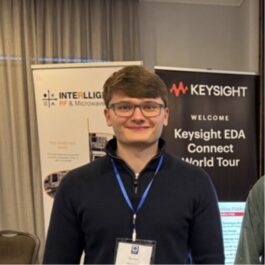
Alfie
CSA Catapult
"Learning industry-standard RF & Microwave EDA tools, developing both technical skills and soft skills, access to cutting-edge laboratory equipment and being able to learn from the wealth of extremely talented engineers at CSA Catapult has been a great benefit to me both professionally and personally."
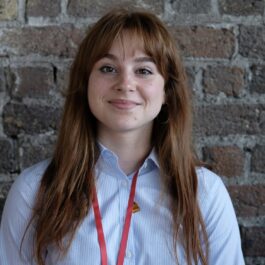
Tara
Arm
"I've been learning more about chip design, the flow of SoC development and how different blocks fit together. I've also started building my verification skills, from writing tests and analysing waveforms to understanding issues in more detail and working out how to solve them."

Grace
Viper Innovations
"Working closely with my line manager, I had helped to create an initial framework for an improvement to one of Viper’s products, using Azure IoT Edge, Python, Raspberry Pi HATs (Hardware Attached on Top) and communication methods"