Blog
Blog
A blog from Stewart Edmondson, CEO, UKESF
There is an oft quoted maxim that “every great journey begins with a single step”. This seems apt as the UKESF has been taking an important first STEP building the future skills pipeline.
In Spring last year, the then Science Minister, Lord Vallance announced a skills package for semiconductors to support “local talent pipelines and university-industry collaboration”. Having won the contract to be the Department for Science, Innovation & Technology’s partner for what became known as the Semiconductor Talent & Education Programme (STEP), we began our work in May 2025.
Now, after a whirlwind 11-months, we can reflect on a hugely successful programme, which included four separate projects from schools through to colleges to universities. Whilst it will take time to assess the longer-term impact of the programme, the headline figures make impressive reading:
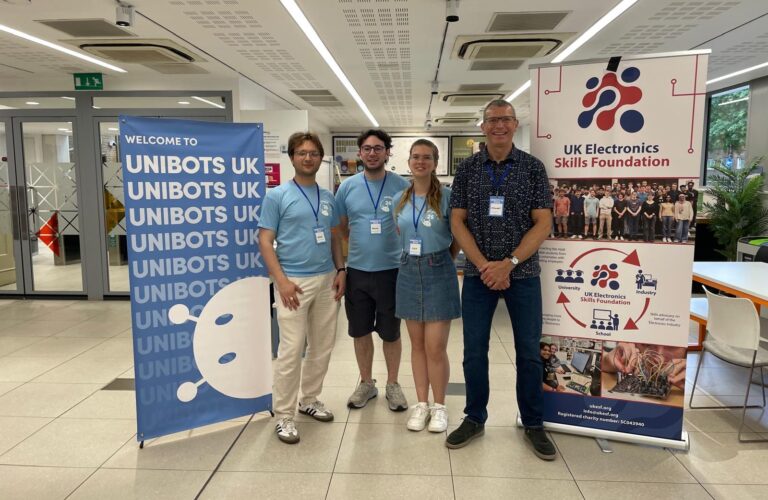
- The Semiconductor Skills in Schools project engaged an estimated 7,000 secondary school students, from 140 schools in 5 key regions across the UK.
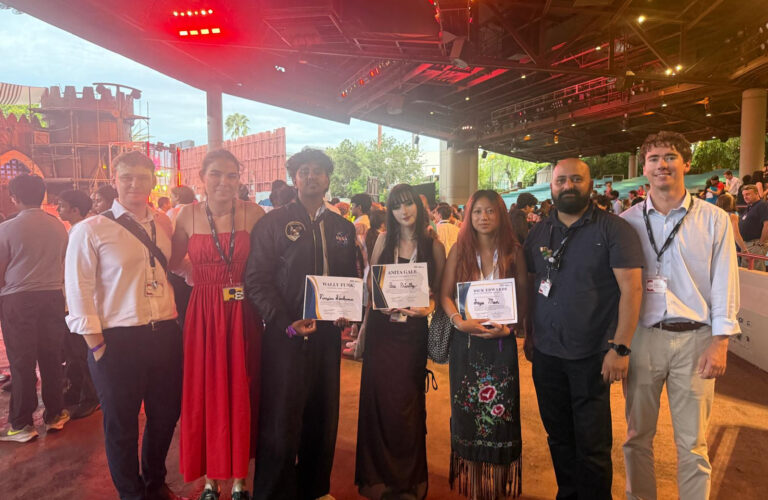
- Over 300 First Year undergraduates received a Semiconductor Talent Award which included bursaries, in-person events, webinars, and learning & development opportunities. As a result, 90% of Award holders now consider it likely that they would look for work in the semiconductor sector in future.
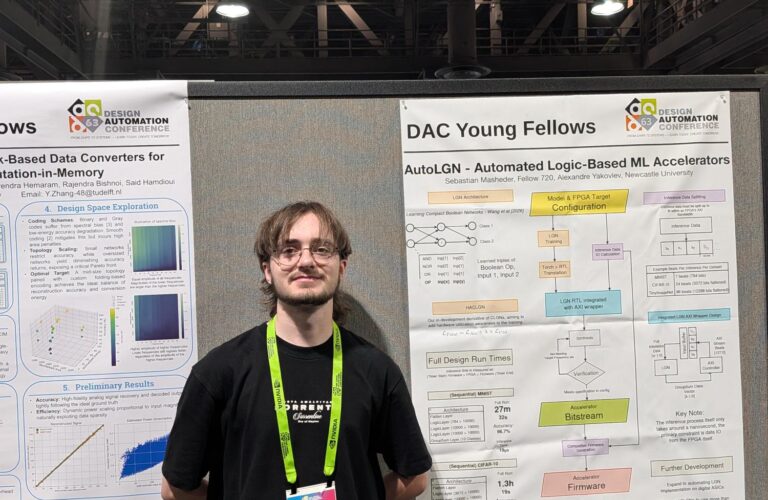
- For digital chip design, over 100 students, were upskilled through a selection of co-curricular and training opportunities, more that 80% reported an increase in their knowledge and confidence to enter a graduate chip design role.
- The potential graduate pipeline has been expanded through the development of a Semiconductor Futures Programme (Physics). This will be a ‘bridging’ course allowing them to enter training courses and post graduate programmes to them on a path to a career in the UK semiconductor Sector.
Although STEP was a stand-alone programme, it didn’t come out of nowhere for the UKESF. Rather, it was built on the solid foundation of more than decade of experience. This has included Spark their Imagination, an impactful programme in South Wales delivered in collaboration with the CSA Catapult, our Electronics Everywhere project providing classroom resources to schools across the UK, as well as experience gained from Girls into Electronics and from our Award-winning, flagship, UKESF Scholarship Scheme.
A key learning from STEP has been about the importance of collaboration. We were able to deliver this national programme because of the relationships and support from our extensive network of partners across the UK, these range from our 30 partner universities through to regional colleges like South Devon. From training providers like Doulos to the National Microelectronics Support Centre and NMIS, the CSA Catapult, TechWorks and of course our many industry partners.
Another reflection has been about the appetite and high level of interest in participating in the programme. Applications for the Semiconductor Talent Award were oversubscribed, and we were able to readily find schools wanting to engage to use our classroom resources and to attend events. This level of enthusiasm has been encouraging and shows that there is untapped potential to build a future skills pipeline.
However, only so much can be achieved in (less than) a single academic year. In this respect, the programme should be viewed very much as a first STEP. In effect, a pilot, to demonstrate what can be achieved.
Like many other nations, we are at a point of strategic inflection for the UK’s semiconductor sector. Looking ahead, there is a need for sustained investment to deliver multi-year, focussed, education interventions and future workforce programmes with ambition. We need to build-on and build out from STEP, to enable the UK to fulfil its strategy ambitions in the semiconductor sector.
Read our Semiconductor Talent Award report here
Read our Semiconductor Skills in Schools report here