
Max

Name: Max
Sponsor: Hanwha Phasor
What appeals to me about Electronics?
When I was at school, I won a British Physics Olympiad (BPhO) Gold and gained a place at the BPhO Oxford University Masterclass. One of the sessions was dedicated to thinking like an engineer. That flicked a switch in terms of wanting to apply my capability more broadly. That’s why I have really enjoyed the opportunity to apply Computing and Maths to the completely new and unexpected field of electronically steered phased array antenna for mobile satcom.
Why I chose Hanwha Phasor
Hanwha Phasor’s Head of HR is a neighbour and knows me as a ‘Mathsy’ guy. She suggested I might benefit from an internship for the summer in an organisation that really runs on maths and physics. She was right. Even though much of Hanwha Phasor’s work involves specialist RF electronics knowledge, I did discover a really good outlet for my maths (and computing).
My placement
I worked for the system design team, working to a stretch target. It was challenging, requiring a really good understanding of maths but with concepts that are quite specific to antennas and communications theory.
I was asked to undertake an essential exploration into the antenna’s key function – satellite beam scanning and how it should work. The algorithms I have simulated use a variety of searching techniques, referencing possible modulation schemes and various noise figures. I also simulated moving targets, when an array is pitching and rolling for a range of different beam scanning rates. This has given the team valuable insight into an important metric ─ the necessity for fast beam re-pointing rates.
My systems supervisor encouraged me to play around, try things, be creative. I was surprised at the amount of freedom I was given to devise solutions. At the same time, I wasn’t turned loose on a project without support. I felt the balance between independence and guidance when you needed it was just right. Additionally, the work I have been doing is of long-term, critical value and will live on in the product the company is launching in around 18 months.
View other scholars profiles
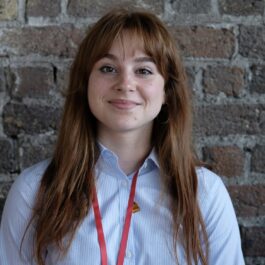
Tara
Arm
"I've been learning more about chip design, the flow of SoC development and how different blocks fit together. I've also started building my verification skills, from writing tests and analysing waveforms to understanding issues in more detail and working out how to solve them."
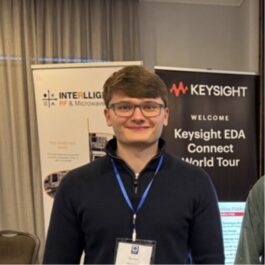
Alfie
CSA Catapult
"Learning industry-standard RF & Microwave EDA tools, developing both technical skills and soft skills, access to cutting-edge laboratory equipment and being able to learn from the wealth of extremely talented engineers at CSA Catapult has been a great benefit to me both professionally and personally."
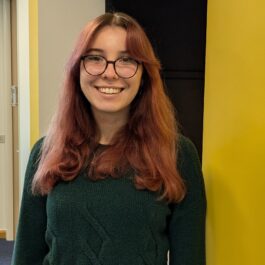
Grace
Viper Innovations
"Working closely with my line manager, I had helped to create an initial framework for an improvement to one of Viper’s products, using Azure IoT Edge, Python, Raspberry Pi HATs (Hardware Attached on Top) and communication methods"